

A Bohra meal starts with a pinch of salt and a spoonful of dessert. Everything else on the menu comes after that, in an order most kitchens would call backwards.
That’s not a quirk. It’s the whole philosophy. Bohra food in Karachi doesn’t separate hospitality from the meal itself, the sequence, the sharing, the etiquette are the point as much as the flavor. Once you understand why the order is reversed, the rest of the cuisine starts making sense too.
It Starts With Dessert, Not Ends With It
Most cuisines save sweetness for last. Bohra tradition flips that entirely.
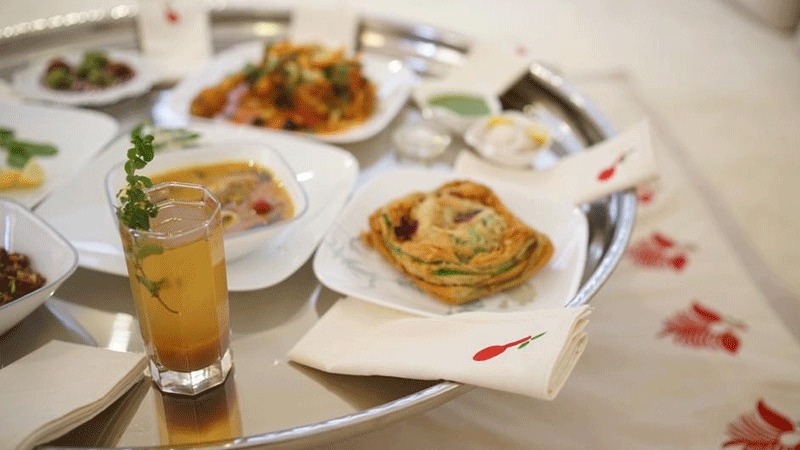
A pinch of salt opens the meal, a palate cleanser rooted in tradition. Then comes mithaas, the sweet course, malida, kharak halwa, sometimes just ice cream. Only after that does khaaraas, the savory course, arrive: meat dishes simmered in ginger, chilli, and garlic, alongside rice preparations shaped by generations of Gujarati and Yemeni influence.
It’s not a random sequence. It’s designed to open the meal on goodwill before anyone’s even hungry.
One Plate, No Hierarchy
The thaal is the real signature, more than any single dish.
A large steel plate. Eight or nine people. Same food, same portions, no separate servings for anyone at the table. Status doesn’t change what lands in front of you. That’s deliberate, not incidental, a shared plate makes equality something you physically sit around, not just talk about.
The centerpiece dish, Dal Chawal Palidu, gets topped up as many times as anyone wants. Everything else stays fixed. One dish that never runs out, on a plate where everyone eats the same.
Nothing Leaves the Thaal
Ask anyone who grew up eating from a thaal, and they’ll mention this before anything else: the plate goes back empty.
Zero food wastage isn’t a slogan here. It’s closer to a rule. Leftovers get folded into other dishes rather than binned. That single habit says as much about the culture behind the cuisine as any spice blend does. This practice is majorly connected to the practice of the Bohra tradition. Whether it be a cultural gathering or a private dinner, no food is wasted and all the leftovers are either stored or distributed among other people.
Where Al Alwaan Carries This Forward
Al Alwaan has been built around the idea of Bohra cuisine.
Thaals, family boxes, custom hampers, all built around the same etiquette that’s defined this food for generations: the pinch of salt, the shared plate, the sequence nobody skips. Al Alwaan treats those details as non-negotiable, not decorative, which is exactly why the food reads as authentic rather than adapted.
FAQs
Q1) Why does a Bohra meal start with something sweet?
It’s tradition, meant to open the meal on a note of goodwill before the savory courses arrive.
Q2) What is a thaal?
A large communal steel plate shared by 8-9 people, symbolizing equality and togetherness in Bohra dining culture.
Q3) What’s the most iconic Bohra dish?
Dal Chawal Palidu, a layered lentil, rice, and soup dish, considered the comfort food of Bohra cuisine.
Q4) Is Bohra cuisine halal?
Yes. Ingredients follow halal dietary guidelines.
Q5) Where can I experience authentic Bohra food in Karachi?
Al Alwaan’s Bohra Delight offers thaals and family boxes rooted in traditional Bohra food in Karachi.
Conclusion
A meal that starts with dessert and ends with an empty plate isn’t following convention. It’s making a point.
Sweetness first. Equality at the center. Nothing wasted.
That’s the whole story, one thaal at a time.